
Most analytics setups grow like weeds. Someone adds an event for a campaign, someone else tracks a button because it was easy, and a year later you have two hundred events, no idea which ones matter, and reports nobody trusts. The cure is boring and powerful: a measurement plan. It’s the document that decides what to track and why before anyone touches a tag — and it’s the difference between analytics that answers questions and analytics that just accumulates noise.
A measurement plan also keeps your campaign tagging consistent, which is where tools like the UTM Builder fit in — but the plan comes first. Let’s build one that actually scales.
What Is a Measurement Plan?
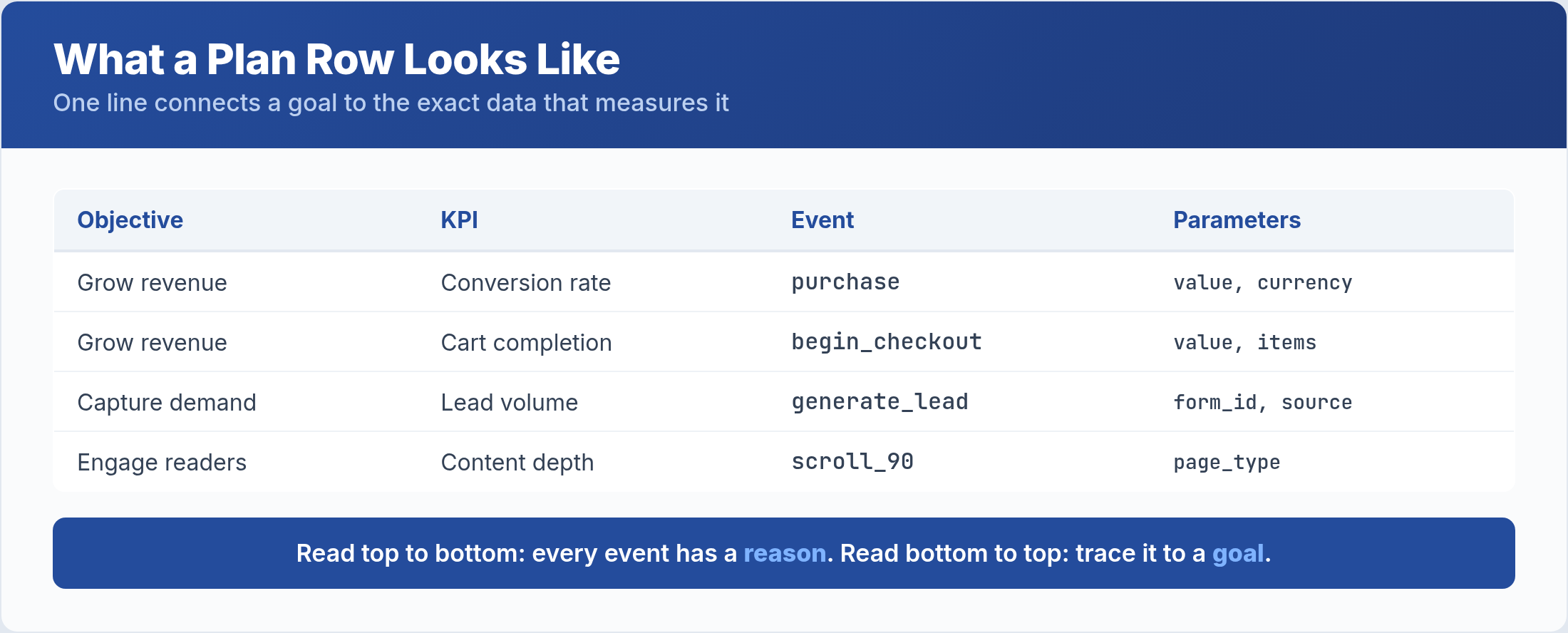
A measurement plan is a structured document that connects your business goals to the specific data you collect. It answers, for every number you track, the question “why are we measuring this?” — and if there’s no good answer, the number doesn’t make the plan.
Think of it as the blueprint that sits above your tracking implementation. Without one, tracking is reactive: you add events when someone asks, and the system sprawls. With one, tracking is intentional: every event exists because it feeds a metric that reflects a goal. The plan turns “track everything and figure it out later” into “track exactly what we need to answer our questions.”
Why You Need One
The symptoms of a missing measurement plan are familiar to anyone who’s inherited an old analytics setup: hundreds of events with cryptic names, no documentation, and a team that doesn’t trust the dashboard. A plan prevents all of it.
It forces prioritization, so you track the handful of things that matter instead of everything that’s possible. It aligns the team around shared definitions, so “conversion” means the same thing to marketing and product. And it creates documentation, so the person who inherits the setup in a year can understand it without reverse-engineering every tag. The few hours you spend writing a plan save dozens of hours of confusion later.
The Structure: Goals Down to Parameters
A good measurement plan flows in one direction: from the business objective at the top down to the individual parameters at the bottom. Each layer justifies the one below it.
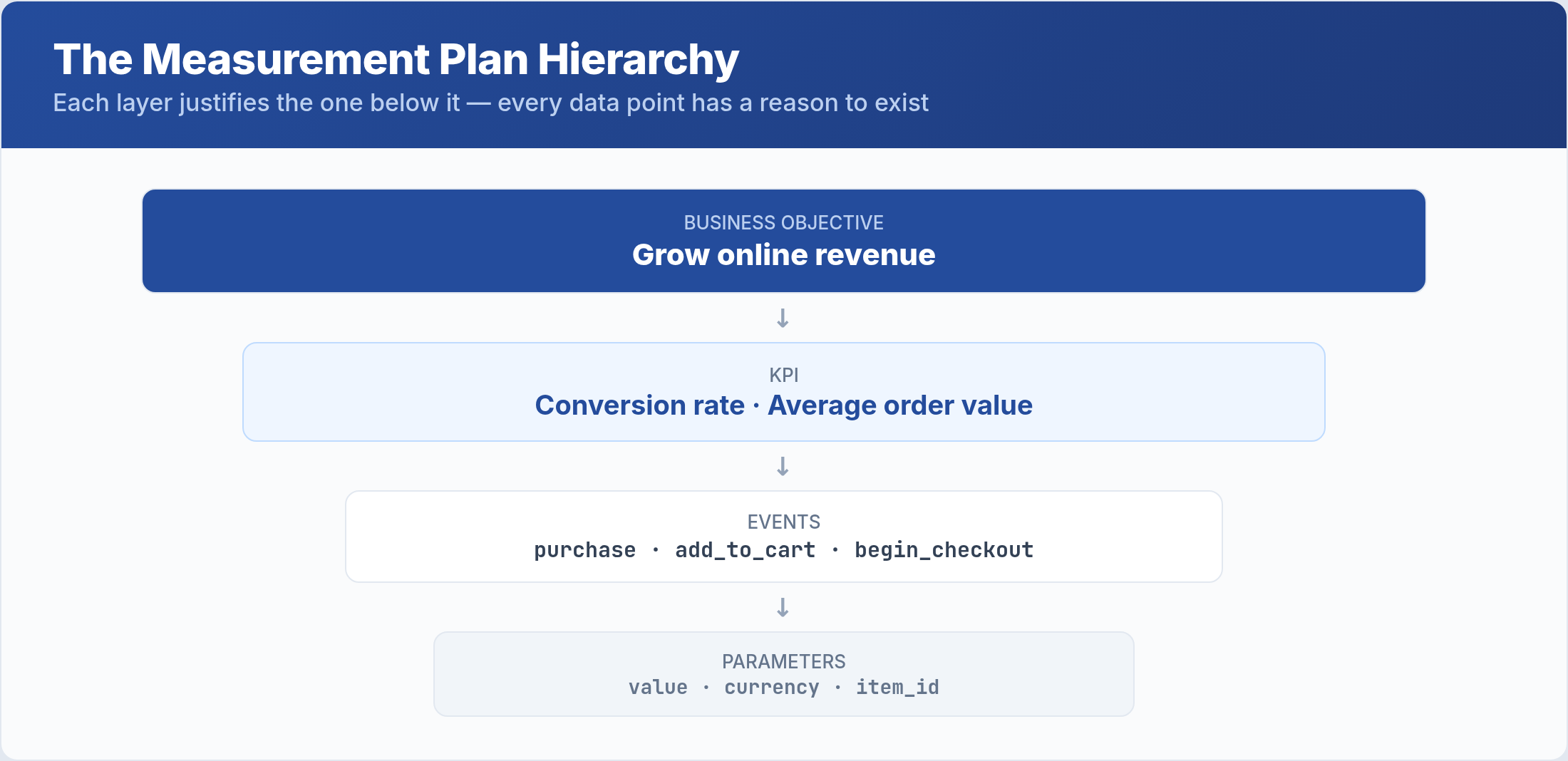
At the top sits the business objective — “grow online revenue.” Beneath it, the KPI that measures progress toward it — conversion rate, average order value. Beneath that, the events you need to calculate the KPI — purchase, add_to_cart, begin_checkout. And at the bottom, the parameters each event carries — value, currency, item_id. Read it top to bottom and every piece of data has a clear reason to exist. Read it bottom to top and you can trace any event back to the goal it serves. For more on choosing the KPI layer, see our guide on choosing the right KPIs.
Start Top-Down, Not Bottom-Up
The single most common measurement mistake is building from the bottom up — starting with what’s easy to track and hoping it adds up to insight. It never does.
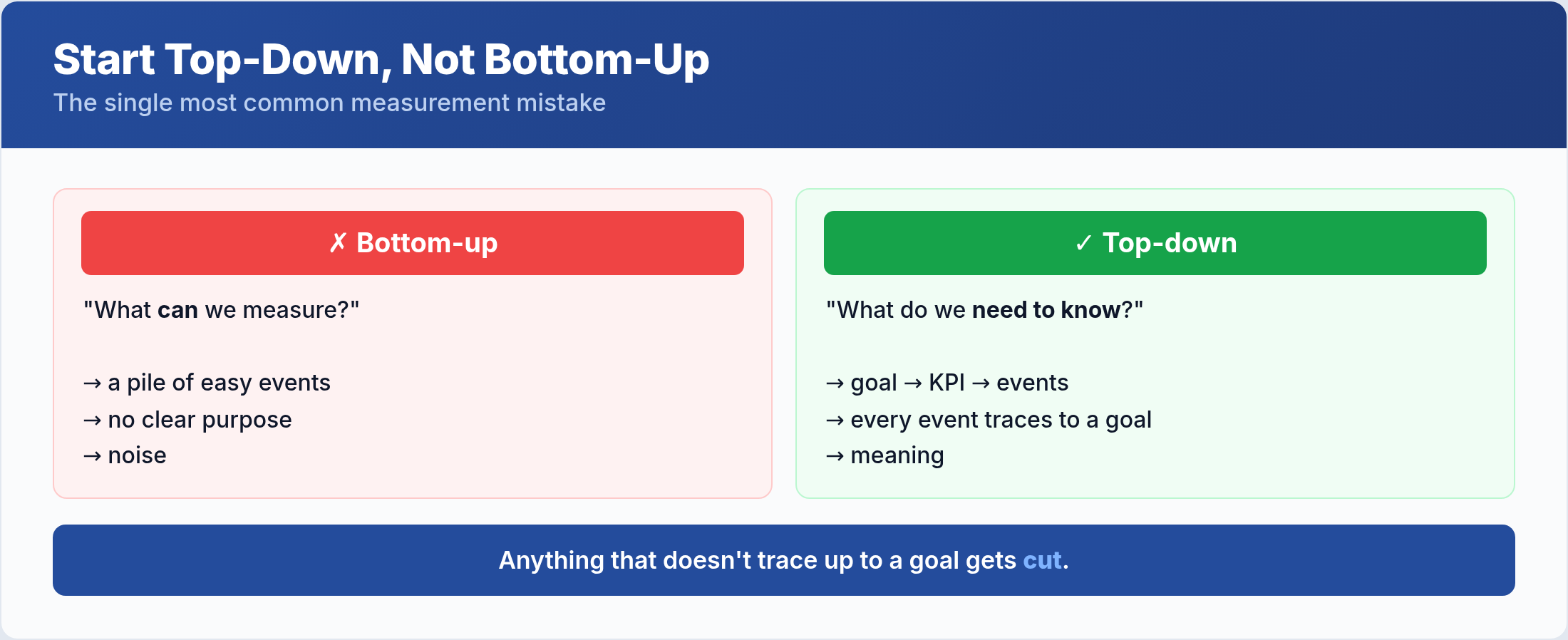
Bottom-up tracking asks “what can we measure?” and produces a pile of events with no clear purpose. Top-down planning asks “what do we need to know?” and works backward to the exact events required to answer it. Start from the business question, identify the KPI that answers it, then define only the events that feed that KPI. Anything that doesn’t trace up to a goal gets cut. This discipline is what keeps a plan small and a dashboard meaningful.
Add a Naming Convention
A measurement plan isn’t complete without rules for naming. Consistent names are what make your data queryable and your reports readable a year from now.
Decide on a casing style and stick to it — snake_case for event and parameter names is the GA4 standard. Use an object-action pattern so names group logically: form_submit, video_play, checkout_complete. Define each custom event and parameter once in the plan, with its allowed values, and reuse those definitions everywhere. The convention lives in the plan so that any developer implementing a tag names it the same way the last one did. Without this layer, a clean hierarchy still rots into btnClick2 and signup_FINAL within months.
Keep It Living
A measurement plan written once and filed away is worse than useless, because it drifts out of sync with reality and people stop trusting it. The plan has to be a living document.
Treat it as the single source of truth: no event ships unless it’s in the plan, and the plan updates whenever a real need appears. Assign an owner who reviews new tracking requests against it and prunes events that no longer serve a goal. Tie it to your data layer structure so implementation and documentation stay aligned. A maintained plan is the backbone of analytics you can trust; an abandoned one is just a stale spreadsheet.
Common Measurement Plan Mistakes
Even teams that build a plan often undermine it. Avoid these.
- Building bottom-up. Tracking what’s easy instead of what matters produces noise. Always start from goals and work down.
- Skipping naming rules. A hierarchy without naming conventions still decays into inconsistent, unqueryable events. Define names in the plan.
- Tracking everything. “We might need it later” is how you end up with two hundred events. Track what answers a question now.
- Filing it away. A plan that isn’t maintained drifts from reality and loses the team’s trust. Keep it living, with an owner.
- No shared definitions. If “conversion” means different things to different teams, the plan failed at its main job. Define every term once.
Frequently Asked Questions
What’s the difference between a measurement plan and a tracking plan?
They overlap, and many teams use the terms interchangeably. A measurement plan emphasizes the strategy — objectives, KPIs, and why you measure. A tracking plan emphasizes the implementation — the specific events, parameters, and naming. In practice, a complete document covers both: the why on top and the how beneath.
How detailed should a measurement plan be?
Detailed enough that a new developer could implement tracking from it without asking questions, but not so exhaustive it’s never finished. Cover every event you track with its parameters, allowed values, and the KPI it serves. If a section isn’t helping someone implement or interpret data, trim it.
Who should own the measurement plan?
Someone accountable for data quality — often an analytics lead, marketing ops manager, or whoever owns the GA4 property. The point isn’t the title; it’s that one person reviews new tracking against the plan and keeps it current, so it stays a source of truth rather than drifting into a stale document.
When should I create a measurement plan?
Before you implement tracking, ideally — but it’s never too late. If you’ve inherited a sprawling setup, a plan is how you bring it back under control: document what exists, map it to goals, and prune what serves none. Starting fresh or cleaning up, the plan comes before the next tag.
The Bottom Line
A measurement plan is the difference between analytics that answers questions and analytics that just accumulates events. Build it top-down: start from a business objective, define the KPI that measures it, then track only the events that feed that KPI, each with named, documented parameters. Add a naming convention so the structure survives contact with multiple developers, and keep the whole thing living with a clear owner. Spend the few hours to write one before your next tracking project, and you’ll never again open an analytics account wondering what half the events are for.